Pages

Showing posts with label open. Show all posts

Wednesday, January 11, 2012

Thoughts on Peer Tutoring

*The following is a response to a reading assaignment for my class Honors 300r: Writing and Pedagogy, which is attached to the writing peer tutoring system (Writting Fellows) at BYU. Enjoy!*


                As a recent addition to Brigham Young University’s Writing Fellows program I found Margot Soven’s “Curriculum-Based Peer Tutors and WAC”, an exceptionally interesting read. Particularly, Soven offers an interesting analysis of the effect of attaching Writing Fellows (WFs) to courses in their own major. (A position I find myself in!)

Tuesday, December 7, 2010

Bazaar Remix: The summation of everything I've learned

Home Page for CatB Remix
For most classes as they conclude students take all of the information they have learned and spill it out onto a piece of paper in a series of A,B,C,D,None and occasional short responses.

This class has, naturally, taken a different, and in my opinion more fulfilling, route. We are sharing what we have learned in a series of presentations of various projects. Go here for a complete list of projects and more information on the night.

Not only is this event exciting for attendees because of what they can learn but this event excites us for the exact same reason. It is the ultimate showcase of the efforts of two of the most amazing professors on BYU's campus. Their students taking what they have learned and sharing with others, the ultimate goal of the entire class.

Monday, November 29, 2010

Web 2.0 and the overwhelming feeling of trying to learn it "all"

Web 2.0 is the nickname for the socially driven World Wide Web that we find flooding us with information every single day. Not only is there new information daily, but new ways to view, record, and share information with those that matter, and those that matter less.

Paul Anderson and Tim O'reilly outlined six ideas that form the basis of the driving force behind Web 2.0:


1 Individual production and User Generated Content
2 Harness the power of the crowd
3 Data on an epic scale
4 Architecture of Participation
5 Network Effects
6 Openness

Three of these held particular interest for me, as they directly relate to the final project my team and I are attempting to piece together, for a grade and the rest of the world to enjoy.
1) Individual production and User Generated Content
3) Data on an epic scale
6)Openness

Friday, November 12, 2010

Self-Directed Learning: a whole different story

Let's clear this up right at the beginning. As far as the Consume, Create, Connect labs will take me in learning I think that I have sufficiently filled that aspect in this past month, completing several of the Digital Literacy Labs. It is that tiny, but very important other part, the part that basically changes the rest of my learning on the internet, the self-directed learning towards things that actually interest me.

learning to ride a bike - _MG_2928by sean

Like this kid learning to ride a bike my self-directed learning has used "training wheels" of its own.

Monday, November 8, 2010

Economics: Keynesian Theory

Economic and government systems have a fundamental connection. Essentially each system needs the cooperation of the other in order to operate successfully. The varieties found in both government and economic systems stems from the amount of control or influence each system allows the other to have. Some economic systems advocate complete governmental control, such as a socialist/communist system. While the other end of the spectrum holds the free market and a democratic system of government, where the government has a small and defined sphere of influence in the economy. Somewhere in the middle is Keynesian Economics, advocating a middle ground of government control aimed at increasing employment rates. Sounds great right? Well that depends on how tight of a grip you want your government to have on your economy. 

Monday, November 1, 2010

Psychology: Sigmund Freud vs Sidney Freeman

Psychology: The deep, mystical, and fascinating study of the human mind. (There's a definition a mother would be proud of.)

Post World War One, the world found itself struggling to reconcile the horror it found in industrial war with the positive view of human nature left to it from the Enlightenment. Some of the world's population turned to the arts, enter Modernism. Other's of the world's population turned back to the sciences, enter Sigmund Freud.

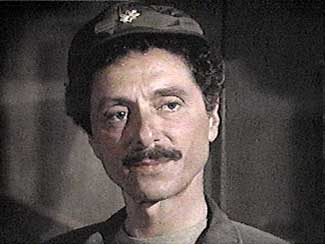
Dr. Sidney Freeman

Sigmund Freud
Sigmund Freud from mansionwb


In the 20th Century Sigmund Freud was at the fore of thinking on the human mind. Following in the footsteps of Dr. Sidney Freeman, who helped the M*A*S*H 4077th deal with the atrocities of war they faced far from home. One of Freud's interesting ideas deals with the development of civilization and brings with it many of the ideas first acknowledged in the Enlightenment.

Thursday, October 21, 2010

Sharing my Paper: the multiple eye idea

The idea behind open source software is that the more people that look at it the easier it will be to find all of the bugs. For my first collegiate paper I have decided to apply this theory to the paper, and have as many people look at it as possible, and while some have scorned this practice I have found it to be extremely helpful.

Two ways I have done this are to 1) physically take various drafts to people around campus, my Profesor, TA, and various people in the writing centers, and 2) to post it online through Google docs. This is my paper. So everyone can feel free to go and look at it and send me any suggestions! (or make the change in a different color on the page!) 

Also, in the spirit of sharing I have created this little Wordle on my paper. Aside from being totally cool and awesome the Wordle has helped me to see which words I use most frequently to add variety to my paper!

Wordle: Gov and Econ

Monday, October 4, 2010

Communism and Socialism: a whole new world

History is a fickle thing. The problem with history is that it is written by people who are, well, human, and therefore imperfect. It was also experienced by people who will put their own lenses on things, it is entirely impossible not to convey some sort of feeling about a subject matter. But perhaps the most important thing to remember about history is that because you are human, as you study history it is not always easy to imagine a society in which you do not live or a society whose rules you do not follow.

As we have begun to look at Socialism, I am having this trouble. I was born in a time virtually with out socialism or communism. The Berlin wall had fallen four years previously, and the USSR dissolved two years previously. To me these things are ancient history, and it is difficult to imagine an actually world in which they worked. Similar to how hard it is to imagine a world where, if I had been born into it, I would not have gone to school, and it would be normal to be married with four children right now. (Ok maybe not four, but that's close right?) And so as the class begins to look at socialism I experience a whole new world.

Thursday, September 16, 2010

Who left that door open?

Recently in class we have been looking at the free software movement and other open movements, such as open government, that have recently come about and seem to parallel the movement of the Enlightenment and Renaissance in that they challenge the long-held authorities and call for free men everywhere to think for them selves. While I am in favor of free men thinking for themselves, I believe this is how we find truth in our lives, I'm not to sure about all of these open movements.

Monday, September 13, 2010

Martin Luther and the Free Software Movement

Many people believe that the main reason to study history is to find the patterns and study them to determine the benefits of the repetition, or a way to prevent evil from coming back again. Such is the case with Martin Luther and his Protestant reformation that can be connected to the relatively recent Free Software Movement. After first the connection is hidden in the complexities of the motives and goals of each, but when looked upon with a broader perspective the patterns are surprisingly clear. Martin Luther set the stage for the rejection of authority found in the Free Software Movement.

Martin GNU


Note Taking, with the World Wide Web

The traditional system of note taking, has always been the pen (or pencil) and paper. The internet, as with most things, is changing all that. For his lab Dalton took on the challenge of exploring different Information Gathering Tools. According to him one of the best tools for online note taking is called Evernote.

A note from Evernote


Monday, September 6, 2010

Networking on the Internet...

Many of us (and certainly those reading this blog!) are familiar with the social networking sites avaliable on the internet including myspace, facebook, and even on-line dating sites, but how much of our interactions should be based solely in the internet? For example, should we "friend" people of facebook that we don't know and will never meet face to face? If you have need of humor on this subject go "online". A similar example could be found in the recent movie, Julie & Julia, where Julia develops a friendship with a woman she has never actually met. Obviously, with the internet especially, there are dangers present in anonymity, but can such relationships exist and be beneficial to all parties? I for one am not "friends" with anyone I don't already know, but I have seen the benefits of beginning a relationship online. Where do we draw the line?