Pages

Friday, November 12, 2010

November Reflections

As the weather turns sour we, as a class, have been asked once more to reflect on our progress as students.

Self Reflection
From Mike Chen


And as I look back upon the path I've taken to get here I can't help but smile.

Thursday, November 11, 2010

The Televised Atom

Professor Burton said something today in class that first struck me as odd, but then I realized how different the world might have been. "Most of our understanding of the atomic age is based in video".

How odd, was my first reaction to this statement. After all don't we read about the bombings of Hiroshima and Nagasaki? But after some reflection, film is what brings not only these horrific events to life, but also the destructive force created by the bombs in general. Here are a couple of short clips that illustrate my point. How different would it have been to read about these events? Could you picture what actually happened without film?

Monday, November 8, 2010

Economics: Keynesian Theory

Economic and government systems have a fundamental connection. Essentially each system needs the cooperation of the other in order to operate successfully. The varieties found in both government and economic systems stems from the amount of control or influence each system allows the other to have. Some economic systems advocate complete governmental control, such as a socialist/communist system. While the other end of the spectrum holds the free market and a democratic system of government, where the government has a small and defined sphere of influence in the economy. Somewhere in the middle is Keynesian Economics, advocating a middle ground of government control aimed at increasing employment rates. Sounds great right? Well that depends on how tight of a grip you want your government to have on your economy. 

Sunday, November 7, 2010

Final Project: Initial Internet Search

For the final project of the awesome Digital Civilizations class I am working in a group of three, to remix the current online version of Eric Raymond's The Cathedral and the Bazaar. Prof. Zappala originally got us interested in this project but I am now really excited to see where it goes.

Over the weekend I have done a preliminary scooping of the internet for related works. I came up with a couple of different (and similarly boring) versions of the same text and a couple of other references from MIT's open course ware.

Here are the different online versions:

Here is the audio file that we listened (or at least we were supposed to listen to it for class):
Here the book is available for purchase on O'reilly:
Here are the links for the two PDF files from MIT:

Friday, November 5, 2010

A Logic Named Joe

If it is your preference to listen to an old radio version of this short story here is the first Youtube video. I actually like it for a video with no moving pictures. =)


Computing: A Logic Named Joe

Yesterday's class discussion focused on one of the problems with computing, what it can and cannot do. What is or is not computable. The decide and undecidable. As explained in David Harel's book, Computers ltd., (works best with firefox) there are simply some problems that computers and humans cannot solve. For example, the tile, verification, and halting problems.

William Fitzgerald Jenkins (aka Murray Leinster) brought up another problem with nearly infinite computing power, several decades before homes had computers in them. The problem? What happens when people suddenly gain logical access to all the information in the world? What do they solve and what do they create?

Monday, November 1, 2010

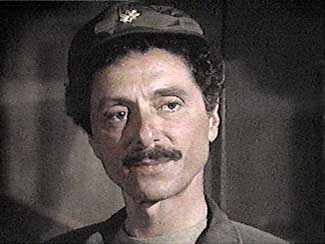
Psychology: Sigmund Freud vs Sidney Freeman

Psychology: The deep, mystical, and fascinating study of the human mind. (There's a definition a mother would be proud of.)

Post World War One, the world found itself struggling to reconcile the horror it found in industrial war with the positive view of human nature left to it from the Enlightenment. Some of the world's population turned to the arts, enter Modernism. Other's of the world's population turned back to the sciences, enter Sigmund Freud.

Dr. Sidney Freeman

Sigmund Freud
Sigmund Freud from mansionwb


In the 20th Century Sigmund Freud was at the fore of thinking on the human mind. Following in the footsteps of Dr. Sidney Freeman, who helped the M*A*S*H 4077th deal with the atrocities of war they faced far from home. One of Freud's interesting ideas deals with the development of civilization and brings with it many of the ideas first acknowledged in the Enlightenment.