If it is your preference to listen to an old radio version of this short story here is the first Youtube video. I actually like it for a video with no moving pictures. =)
Friday, November 5, 2010


Computing: A Logic Named Joe
Yesterday's class discussion focused on one of the problems with computing, what it can and cannot do. What is or is not computable. The decide and undecidable. As explained in David Harel's book, Computers ltd., (works best with firefox) there are simply some problems that computers and humans cannot solve. For example, the tile, verification, and halting problems.
William Fitzgerald Jenkins (aka Murray Leinster) brought up another problem with nearly infinite computing power, several decades before homes had computers in them. The problem? What happens when people suddenly gain logical access to all the information in the world? What do they solve and what do they create?
William Fitzgerald Jenkins (aka Murray Leinster) brought up another problem with nearly infinite computing power, several decades before homes had computers in them. The problem? What happens when people suddenly gain logical access to all the information in the world? What do they solve and what do they create?
Monday, November 1, 2010
Psychology: Sigmund Freud vs Sidney Freeman
Psychology: The deep, mystical, and fascinating study of the human mind. (There's a definition a mother would be proud of.)
Post World War One, the world found itself struggling to reconcile the horror it found in industrial war with the positive view of human nature left to it from the Enlightenment. Some of the world's population turned to the arts, enter Modernism. Other's of the world's population turned back to the sciences, enter Sigmund Freud.
In the 20th Century Sigmund Freud was at the fore of thinking on the human mind. Following in the footsteps of Dr. Sidney Freeman, who helped the M*A*S*H 4077th deal with the atrocities of war they faced far from home. One of Freud's interesting ideas deals with the development of civilization and brings with it many of the ideas first acknowledged in the Enlightenment.
Post World War One, the world found itself struggling to reconcile the horror it found in industrial war with the positive view of human nature left to it from the Enlightenment. Some of the world's population turned to the arts, enter Modernism. Other's of the world's population turned back to the sciences, enter Sigmund Freud.
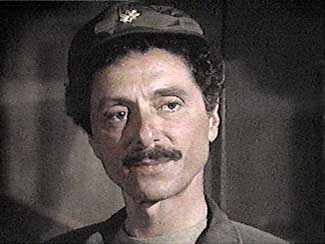 |
| Dr. Sidney Freeman |
 |
| Sigmund Freud from mansionwb |
In the 20th Century Sigmund Freud was at the fore of thinking on the human mind. Following in the footsteps of Dr. Sidney Freeman, who helped the M*A*S*H 4077th deal with the atrocities of war they faced far from home. One of Freud's interesting ideas deals with the development of civilization and brings with it many of the ideas first acknowledged in the Enlightenment.
Modernism: revisited
This weekend as I was checking up on my blog, and getting ready to write Tuesday's assignment I realized that I had not posted for last Thursday. I wrote it, but just forgot to post. (Incredible I know, but it is actually in my draft folder!) But now I have many more insightful ideas, so you all get to hear those instead.
While the Industrial Revolution changed many aspects of the lives of ordinary people for the better, it also managed to change them for the worse. The Industrial Revolution industrialized war, and for those that fought in World War One, a war fought with industrial weapons and Old World tactics, it made war a waking nightmare. As the war moved forward not only did hundreds of thousands of people died, but faith in science and God died right along with them. With God and science gone, Art took center stage. But not the Art of the Renaissance, Enlightenment, or even Romanticism, a whole new kind of art, one that showed the distorted world many saw all around them.
A personalization occurred. A theme of art for art's sake appeared, pushing against the Industrial revolution and all that it did to dehumanize the masses. In a word, artists of the modern age rejected all previously conceived forms and functions.
While the Industrial Revolution changed many aspects of the lives of ordinary people for the better, it also managed to change them for the worse. The Industrial Revolution industrialized war, and for those that fought in World War One, a war fought with industrial weapons and Old World tactics, it made war a waking nightmare. As the war moved forward not only did hundreds of thousands of people died, but faith in science and God died right along with them. With God and science gone, Art took center stage. But not the Art of the Renaissance, Enlightenment, or even Romanticism, a whole new kind of art, one that showed the distorted world many saw all around them.
A personalization occurred. A theme of art for art's sake appeared, pushing against the Industrial revolution and all that it did to dehumanize the masses. In a word, artists of the modern age rejected all previously conceived forms and functions.
Monday, October 25, 2010
Count Your Many Blessings
Today as I went to look up the assignment for class I found a little blessing:
We've decided to put our march through history on pause for a day. This should allow some of you to catch up on your blogging. Be sure to come to class, since we plan to discuss several important components of digital culture (listed below, in case you want to do some self-directed study on them), and we will be introducing the final project assignment.No, I won't be taking this opportunity to catch up on my blogging, I see this blessing in a different way. I see it as the opportunity to catch up on the other things pilling up around, namely a certain chemistry test that I have tomorrow. So thanks for the break professors, and to everyone, don't forget to "Count Your Many Blessings".
Saturday, October 23, 2010
Paper Topic
Professor Burton pointed out the other day that it might be helpful to know what the topic/ background was for the essay so that comments could be more helpful. So here it is, the piece is for American Heritage and the prompt is as follows: " Write an essay in which you argue for a connection between the economic system and the political system. How are the two systems connected? How does one support the other? If one is not healthy, can the other still survive? What do citizens need to know about economics and about politics for them to be able to participate fully and intelligently in civic affairs?"
Here is the link for my latest edition:https://docs0.google.com/document/d/1YDQmuRNFJTBa-Js064Lsrs2z7hy-nF8ggmpFzA1wrs0/edit?authkey=CPGu-IgN#
Prof: Zappala: I don't address China in the paper because I at least still consider it an experiment in trying to have both a socialist government and a free market economy. There are some who believe that China will eventually become democratic, but it may not.
Also, I am trying to keep coerce in the conclusion because I see it as forcing the type of happiness that we sometimes don't always see as happiness, as in temporary happiness vs. eternal happiness.
Additionally, I am turning this particular paper in on Friday the 29th of October, however there will be more to follow! (at least one and possibly two if I feel like being my overachieving self =))
Here is the link for my latest edition:https://docs0.google.com/document/d/1YDQmuRNFJTBa-Js064Lsrs2z7hy-nF8ggmpFzA1wrs0/edit?authkey=CPGu-IgN#
Prof: Zappala: I don't address China in the paper because I at least still consider it an experiment in trying to have both a socialist government and a free market economy. There are some who believe that China will eventually become democratic, but it may not.
Also, I am trying to keep coerce in the conclusion because I see it as forcing the type of happiness that we sometimes don't always see as happiness, as in temporary happiness vs. eternal happiness.
Additionally, I am turning this particular paper in on Friday the 29th of October, however there will be more to follow! (at least one and possibly two if I feel like being my overachieving self =))
Thursday, October 21, 2010
Sharing my Paper: the multiple eye idea
The idea behind open source software is that the more people that look at it the easier it will be to find all of the bugs. For my first collegiate paper I have decided to apply this theory to the paper, and have as many people look at it as possible, and while some have scorned this practice I have found it to be extremely helpful.

Two ways I have done this are to 1) physically take various drafts to people around campus, my Profesor, TA, and various people in the writing centers, and 2) to post it online through Google docs. This is my paper. So everyone can feel free to go and look at it and send me any suggestions! (or make the change in a different color on the page!)
Also, in the spirit of sharing I have created this little Wordle on my paper. Aside from being totally cool and awesome the Wordle has helped me to see which words I use most frequently to add variety to my paper!
Subscribe to:
Posts (Atom)