This is the second installment in the series of random anthropology papers...
Our history of the world shows us that undoubtedly the world has changed since its conception.
As the world changes with, what appears, to many, as, an increasingly rapid pace, some have begun to question how new technologies develop, how new ideas develop and how these relate to changes within the lives of individuals. Clearly both new technologies (hardware and software) as well as new ideas (the applications) come from human thought, however that transition takes place, technology to ideas or ideas to technology, it clearly depends on people believing in a different social norm. Each transition then alters the way that the rest of the world lives as they shift to accept the “new norm”. Recent changes to the computing market clearly illustrate the process from technology to ideas and ideas to technology, with each changing the world in its own way.
By the late 1900s IBM had established its monopoly on the computing world. [1] They had built their company, and success, on ideas proposed by anthropologists and thinkers like Karl Marx and Michel Foucault. Marx and Foucault, along with others, believed that those who controlled the knowledge had power over everyone else. [2] IBM thought that this meant they would always control the computing market because they controlled, essentially, the “knowledge” of the technology. [1] However, they did not account for the possibility of change brought about by those who Anthony Giddens said “might choose to act contrary to a shared idea or practice” despite the social consequences for doing so. [2] Thus opening the door for people like Bill Gates and Steve Jobs to use the knowledge (or technology) from IBM and apply it to a “new” area, the personal computer. Because these men had a vision for a different sort of normal, the one where every person had access to their own computer, the acted contrary to the idea put forth by IBM that only large corporations needed/used computers. Gates and Jobs further opened the arena of personal computing by taking old technologies, from Xerox for example, and applying it to their new idea. [1] Further illustrating that because they did not care about any social consequences of using this knowledge, they were able to create, and perpetuate, this new idea of a personal computer. One of those social consequences they did not account for was creating a new generation of tech companies that do not make people products they already know they want, rather they open entirely new markets for products the general population had not yet conceived possible.
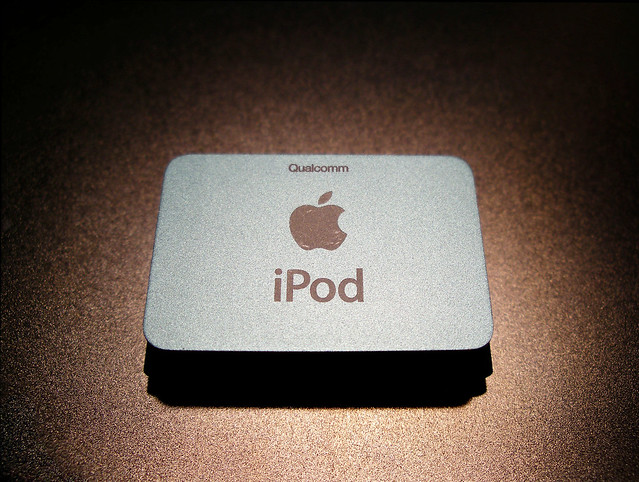
One of those companies is Qualcomm. Long before the age of the “smart phone” engineers at Qualcomm worked to develop the technology that not only allows people to talk on the phone, but to transmit any sort of message over any distance, and to make founder Irwin Jacobs’ idea of a palm pilot strapped to a wireless telephone a reality. Here again the people perpetuating the social changes not only ignored all social convention, but also the current technological paradigm which said it could not be done. Thomas Khuhn theorized that “individual minds are intimately connected with the events of the world and the thoughts and actions of other people”. [2] As Qualcomm and its partners took a new idea and developed the new technology needed to make it a reality they forced a shift in the entire world’s technological paradigm. Further Qualcomm, as well as Apple and Microsoft, proved Karl Marx wrong when he proposed that only those with the media resources could control the available knowledge. [2] These companies harnessed the greatest power to spread social change, we, the people.
All of these new tech companies defied the paradigm of the time and brought new ideas and technologies to the world. Subsequently they contorted to the best resource available to them, word of mouth, and forced the world into the reality that best suited them. These companies used the ideas articulated by anthropologists, such as Mikhail Bakhtin and Michel Foucault, to suggest, and then insist, that everyone needs their own computer and cell phone. Bakhtin and Foucault theorized that a direct interaction between how one person thinks and lives to how another person thinks and lives. [2]
No matter which transition studied, Gates’ and Jobs’ technology to idea or Jacobs’ idea to technology, both have similarities in terms of how they came about and how they affected change in the daily lives of people all around the world. Both transitions insist that only those willing to challenge the status quo have the vision needed to change the world and further only those willing to turn around and use the principles of “normal”, that they fought against in the beginning, can force this technology on the world.
Works Cited
Our history of the world shows us that undoubtedly the world has changed since its conception.
 |
| Photo Credit: Lisa Brewster via Flickr |
By the late 1900s IBM had established its monopoly on the computing world. [1] They had built their company, and success, on ideas proposed by anthropologists and thinkers like Karl Marx and Michel Foucault. Marx and Foucault, along with others, believed that those who controlled the knowledge had power over everyone else. [2] IBM thought that this meant they would always control the computing market because they controlled, essentially, the “knowledge” of the technology. [1] However, they did not account for the possibility of change brought about by those who Anthony Giddens said “might choose to act contrary to a shared idea or practice” despite the social consequences for doing so. [2] Thus opening the door for people like Bill Gates and Steve Jobs to use the knowledge (or technology) from IBM and apply it to a “new” area, the personal computer. Because these men had a vision for a different sort of normal, the one where every person had access to their own computer, the acted contrary to the idea put forth by IBM that only large corporations needed/used computers. Gates and Jobs further opened the arena of personal computing by taking old technologies, from Xerox for example, and applying it to their new idea. [1] Further illustrating that because they did not care about any social consequences of using this knowledge, they were able to create, and perpetuate, this new idea of a personal computer. One of those social consequences they did not account for was creating a new generation of tech companies that do not make people products they already know they want, rather they open entirely new markets for products the general population had not yet conceived possible.
One of those companies is Qualcomm. Long before the age of the “smart phone” engineers at Qualcomm worked to develop the technology that not only allows people to talk on the phone, but to transmit any sort of message over any distance, and to make founder Irwin Jacobs’ idea of a palm pilot strapped to a wireless telephone a reality. Here again the people perpetuating the social changes not only ignored all social convention, but also the current technological paradigm which said it could not be done. Thomas Khuhn theorized that “individual minds are intimately connected with the events of the world and the thoughts and actions of other people”. [2] As Qualcomm and its partners took a new idea and developed the new technology needed to make it a reality they forced a shift in the entire world’s technological paradigm. Further Qualcomm, as well as Apple and Microsoft, proved Karl Marx wrong when he proposed that only those with the media resources could control the available knowledge. [2] These companies harnessed the greatest power to spread social change, we, the people.
All of these new tech companies defied the paradigm of the time and brought new ideas and technologies to the world. Subsequently they contorted to the best resource available to them, word of mouth, and forced the world into the reality that best suited them. These companies used the ideas articulated by anthropologists, such as Mikhail Bakhtin and Michel Foucault, to suggest, and then insist, that everyone needs their own computer and cell phone. Bakhtin and Foucault theorized that a direct interaction between how one person thinks and lives to how another person thinks and lives. [2]
No matter which transition studied, Gates’ and Jobs’ technology to idea or Jacobs’ idea to technology, both have similarities in terms of how they came about and how they affected change in the daily lives of people all around the world. Both transitions insist that only those willing to challenge the status quo have the vision needed to change the world and further only those willing to turn around and use the principles of “normal”, that they fought against in the beginning, can force this technology on the world.
Works Cited
|
[1]
|
R. Cringley,
Director, Triumph of the Nerds. [Film]. United States of America:
Public Broadcasting Station, 1996.
|
|
[2]
|
D. Crandall, A Short
Introduction to Anthropology, Provo: Brigham Young University, 2005.
|


.jpg)